
Heavy machinery forms the backbone of modern industry, enabling feats of construction, mining, agriculture, and transportation that would be impossible with human labor alone. From towering excavators digging foundations to massive haul trucks moving mountains of earth, these mechanical behemoths operate under demanding conditions. Understanding the fundamental systems that make them run is essential for engineers designing, maintaining, and operating them. At its core, heavy machinery relies on a sophisticated interplay of power generation, transmission, actuation, structural integrity, and control systems.
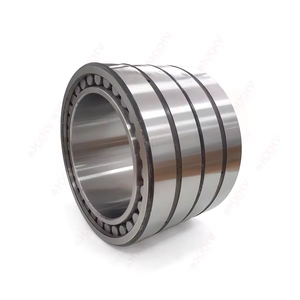
(What Makes Heavy Machinery Run)
The heart of nearly all heavy machinery is its power source. Diesel engines dominate this landscape due to their exceptional torque output, fuel efficiency, durability, and reliability under heavy loads and in harsh environments. These large displacement engines are engineered to provide immense power at low rotational speeds, delivering the necessary force to move massive weights and overcome significant resistance. While diesel reigns supreme, electric drives are increasingly found in specific applications like large mining trucks, leveraging high-torque electric motors powered by diesel generators (diesel-electric) or battery packs, offering advantages in controllability and potential environmental benefits. Hydraulic systems also often incorporate dedicated power units with hydraulic pumps driven by smaller diesel engines or electric motors.
Generating power is only the first step; effectively transmitting that power to where work needs to be done is critical. This is the role of the transmission system. Heavy-duty transmissions, often complex multi-speed gearboxes or continuously variable transmissions (CVTs), manage torque multiplication and gear selection. Torque converters, acting as fluid couplings, allow the engine to run while the machine is stationary and provide smooth power transfer under load. Differentials distribute power to drive wheels, while final drives provide the final gear reduction to maximize torque at the wheels or tracks. Drive shafts and universal joints transmit rotational power efficiently over distances within the machine structure. For tracked equipment like bulldozers and excavators, specialized steering clutches and brakes manage differential power delivery to the tracks for turning.
While transmissions handle rotational power, much of the actual work – lifting, digging, pushing – relies on linear force. This is the domain of hydraulic systems. Hydraulic pumps, driven by the engine, generate high-pressure fluid flow. This pressurized fluid is directed through control valves to hydraulic cylinders and hydraulic motors. Cylinders convert hydraulic pressure into powerful linear motion, extending and retracting booms, arms, and blades. Hydraulic motors convert hydraulic pressure into powerful rotational motion, driving attachments like winches or the tracks on some excavators. Hydraulics excel at delivering immense force in a compact package, allowing precise control over powerful movements through relatively small levers and joysticks in the operator’s cab.
Supporting these powerful systems is a robust structural framework. Heavy machinery frames are constructed from high-strength steel, designed using finite element analysis to withstand enormous static and dynamic loads, vibrations, and impacts without failure. This structural integrity is paramount for safety and longevity. Undercarriages for tracked equipment feature heavy-duty rollers, idlers, and drive sprockets, while wheeled machines rely on reinforced axles and large, specialized tires built for demanding terrain and heavy payloads.
Finally, modern heavy machinery integrates sophisticated electronic control systems. Engine Control Units (ECUs) manage fuel injection, timing, and emissions. Transmission Control Units (TCUs) optimize gear shifts. Programmable Logic Controllers (PLCs) and dedicated controllers manage hydraulic valve operation, implement safety interlocks, and integrate operator inputs. Sensors monitor everything from engine temperature and hydraulic pressure to machine orientation and implement position. Telematics systems provide remote monitoring and diagnostics. This layer of electronics enhances efficiency, precision, safety, and provides valuable diagnostic data.
(What Makes Heavy Machinery Run)
In conclusion, the reliable operation of heavy machinery is a testament to the integration of powerful diesel engines (or alternative drives) generating the necessary energy, robust transmission systems converting and directing that power, highly efficient hydraulic systems delivering immense linear and rotational force, a durable structural frame providing integrity, and increasingly sophisticated electronic controls ensuring precision, efficiency, and safety. It is this complex synergy of mechanical and electronic systems, engineered for immense power and durability, that enables these giants to perform the demanding tasks essential to modern infrastructure and industry.